Brain & Performance
Fasting and Brain Fog: Why It Happens and How to Stay Sharp

It arrives mid-afternoon. You are eight or nine hours into a fast. It's a productive day, but somewhere around 2 or 3pm, the words on the screen go soft and your thinking feels like it is moving through syrup. Breaking your fast is not an option -- you haven't yet achieved your fasting goal. But it turns out this kind of mental haze is common, and it has a clear physiological cause. For most people the fog eases up as the body settles into the fast.
Why do you get brain fog when fasting?
Fasting brain fog is usually a mild, temporary side effect of the biological shift that occurs when your brain changes fuel sources. As blood glucose dips and before ketone bodies rise to pick up the slack, the transition can feel foggy. The fog is often made worse by low electrolytes and dehydration, but as the body adapts, the fog typically lifts.
The brain is about 2 percent of your body weight, but it burns roughly 20 percent of the body's energy at rest. Most of the time that's glucose, with the brain drawing on ketone bodies only when glucose is scarce. But the brain's balance between using glucose and ketones depends largely on the level of ketones circulating in the blood.1 During a longer fast, as glucose falls, the brain can lean more on ketones such as beta-hydroxybutyrate. For example, in classic prolonged-fasting studies, ketones eventually became the predominant brain fuel.2 But a short daily fast produces only mild, partial ketosis, so think of it as the brain topping up with ketones, not fully switching over. The friction and fog fasters experience is in that handover. Fasters often report a cluster of passing symptoms nicknamed the keto flu: headache, fatigue, nausea, dizziness, and that foggy feeling. Those symptoms pass as fat adaptation sets in, or resolve when you eat.3
Key takeaways
- Fasting brain fog is common and usually temporary, driven by the brain's fuel transition from glucose to ketones, and it tends to ease as the body adapts.
- Electrolytes and hydration are the strongest practical lever: a fast flushes out sodium and potassium, and replacing them supports concentration and how you feel.
- Sleep, black coffee or a short walk are well-evidenced ways to stay alert without breaking a fast.
- To track your window and see the fog pass, the free Meridian app is a good place to start.
Does fasting make you less sharp?
Mostly, no. The largest analysis to date, pooling 222 effect sizes across roughly 3,500 healthy adults at a median 12-hour fast, found no meaningful difference in cognition between fasted and fed states, with only modest reductions for longer fasts and for younger people.4 Earlier reviews were more mixed, with some studies showing no change and others showing task-specific dips in areas like psychomotor speed or executive function.5 A recent fasting trial illustrates the point: over ten days of 16:8 intermittent fasting, objective cognition and mood held steady, and the only effect was feeling slightly less concentrated before noon, which resolved after eating.6 That mid-morning period is also when hunger peaks during a fast. Learn more about why you get hungry at 11am when fasting here.
So the fog is real as a feeling, but on the tests, sharpness largely holds. That gap between how you feel and how you perform matters: the fog is usually something you can work through, not a sign that your brain has run out of fuel.
How do electrolytes and hydration affect fasting brain fog?
Electrolytes are one of the strongest levers you can use to support your fast and stave off brain fog. As insulin is lowered during a fast, the kidneys retain less sodium and flush even more out with water, because insulin normally tells the kidney to reabsorb sodium.7 This is the natriuresis of fasting. In controlled human studies, the first days of a fast increase urinary loss of both sodium and potassium, so these electrolytes can run low unless they are replaced.8 Reviews of the switch into ketosis note a physiological rationale for supporting the body with electrolytes and fluids during that adaptation, while being clear that direct clinical proof they relieve symptoms is still limited.9 So the mechanism is sound and replacing what you lose is a sensible move.
How does this affect brain fog? Sodium levels are tied to attention: even mild reductions in blood sodium are associated with slower attention and more lapses, which are reversed when sodium levels are replenished.10 That evidence comes from a clinical low-sodium state, not from ordinary fasting. A well-hydrated faster taking in enough sodium does not typically end up there. The more common misstep runs the other way: drinking large volumes of plain water on an empty stomach while losing sodium can leave you feeling worse, not better. Fluids plus sodium tend to sit better than water alone.
Hydration itself is also part of the picture. Mild dehydration of roughly 1 to 2 percent of body mass is associated with lower levels of concentration, more headache, and worse mood in women11 and with slower working memory and reduced vigilance alongside more fatigue in men.12 Restoring fluids after a stretch without water is associated with relief of fatigue and better attention and short-term memory.13 Concrete cognitive studies have mixed results: one meta-analysis finds small impairments, clearest in cases where a more than 2 percent body-mass loss was seen (a level that a hydrated faster is unlikley to reach),14 while another finds no significant effect at all.15 All in all, hydration and adequate electrolytes support how you feel during a fast and how well you concentrate, which is exactly where fasting fog occurs.
For a fuller walk through of the numbers, see the electrolytes guide.
From Kētos
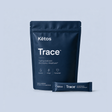
Replacing electrolytes flushed out during your fast is one of the most practical things you can do for mid-afternoon brain fog. Trace is designed specifically for that purpose.
Trace delivers the sodium and potassium a fast flushes out, alongisde magnesium, another key electolyte, all with zero sugar and zero calories, supporting hydration and electrolyte balance without interrupting your fast.
Explore Trace →What else helps you stay sharp while fasting?
After electrolytes and hydration, a handful of everyday habits carry the most weight.
Sleep does a huge deal of work in terms of supporting cognitive performance during a fast. A lack of sleep can have a significant negative effect on attention span. When researchers pooled dozens of sleep-loss studies, the first performance area dropped most was not complex thinking like reasoning; it was sustained attention — the simple act of staying focused on one thing without drifting.16 A well-rested fast feels very different from a sleep-deprived one, so make it your priority to get plenty of sleep every night of your fast.
Coffee helps too. Caffeine, including black coffee, supports alertness and attention, which can offset the low-energy feeling some people notice while fasting.17 But timing is important to keep in mind — caffeine taken even 6 hours before bed can disrupt sleep, and remember, protected sleep is what keeps you sharp the next day.18
Light movement can also help significantly. Ten minutes of easy stair walking left people feeling more energetic and awake than a small dose of caffeine did, in one study of tired adults.19 Gentle movement also supports steadier blood sugar: for example, brief walking breaks reduce the post-meal glucose rise, a good habit after you break a fast.20
| Lever | Why it may help |
|---|---|
| Electrolytes and fluids | Replaces the sodium and potassium a fast flushes out; supports concentration and how you feel |
| Time and adaptation | Fog tends to be worst early and eases as the body settles into using fat and ketones |
| Sleep | Best-evidenced lever for alertness and attention |
| Caffeine, timed early | Supports alertness; finish earlier in the day to protect sleep |
| Light activity | A short walk may lift how energetic you feel |
How do focus ingredients like L-tyrosine, L-theanine, and rhodiola help?
L-tyrosine is an amino acid precursor that the body uses to produce the catecholamines such as dopamine and norepinephrine, two key neurotransmitters essential to healthy cognitive function. Dopamine is central to the motivation and reward pathways, the brain circuitry that gets you started toward a task. Norepinephrine helps maintain alertness and sustain attention once you are involved in a task. Therefore, L-tyrosine may support working memory and information processing under short-term stress or heavy cognitive load. In a review of fifteen studies, almost all single-dose cases, found that tyrosine buffers the drop in working memory and cognitive information processing created during demanding conditions, such as extreme weather or heavy mental load. The reviewers suggest that that is because tyrosine helps to replenish the dopamine and norepinephrine that demanding conditions deplete.21 Moreover, small lab studies link tyrosine to better performance on more challenging working-memory tasks22 and easier task switching.23 Note that these all are acute, non-fasting studies. Additional research is needed to determine tyrosine's effects on the brain in a fasted state.
L-theanine is an amino acid commonly found in tea. It is generally considered to support calm alertness and is associated with increased alpha-wave activity, the brain rhythm typical of a relaxed, wakeful state, as opposed to a drowsy one.24 Its clearest cognitive signal shows up when it is paired with caffeine: the combination has been linked to better attention and attention-switching,2526 whereas L-theanine on its own produced no behavioral effect on those measured outcomes in those studies. In otherwords, L-theanine is most effective alongside your coffee, not instead of it.
Rhodiola rosea is one of our active ingredients with branded clinical studies behind it. The standardized SHR-5 extract has been clinically studied for mental fatigue. In a randomized crossover trial of night-duty physicians SHR-5 rhodiola rosea was associated with reduced mental fatigue and may support concentration during demanding low-sleep stretches.27 Supporting evidence has also been found in studies with stressed students,28 a single-dose trial in cadets29 and a 28-day study where rhodiola rosea was associated with reduced feelings of fatigue and better concentration.30 Literature reviews describe the overall clinical evidence for standardized rhodiola in stress and fatigue as encouraging.31 It's important to note that each of these trials was run in a non-fasting setting such as shift work or exam stress, which is an analogue for fasting fatigue rather than direct evidence of its effectiveness in a fasted state.
Do electrolytes, coffee, or these ingredients break a fast?
A simple way to check is by using what we call the Three-Gate Test. Ask three questions of anything you put in your mouth during a fast:
- Does it deliver meaningful calories?
- Does it raise insulin?
- Does it switch on mTOR, the body's main growth signal that a fast turns down?
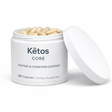
If the answer to all three is no, it clears the Three-Gate Test. For example, water and electrolytes carry no calories, do not raise insulin, and do not switch on mTOR. Black coffee is close to calorie-free, does not meaningfully raise insulin, and does not flip the mTOR switch. The amino acids and rhodiola in a focus capsule, at those small amounts, are very unlikely to deliver meaningful calories, meaningfully raise insulin, or strongly activate mTOR. All of them clear all three gates. For the full framework and the science behind each gate, see the pillar guide, What Breaks a Fast.
When is brain fog not just the fast?
Almost always, fasting fog is mild, tied to time of day, and gone after you eat. Sometimes it is a signal to take seriously. Shakiness, sweating, a racing heart, confusion, fainting, or fog that is severe, does not lift after eating, or keeps recurring can point to low blood sugar or something unrelated to fasting. If that is you, or if you are pregnant, managing diabetes, taking medication that affects blood sugar or blood pressure, or living with a health condition, talk with a healthcare professional before fasting or adjusting your routine. Kētos does not diagnose or treat anything; when the pattern looks off, a clinician is always the right call.
References
- Jensen NJ, Wodschow HZ, Nilsson M, Rungby J. Effects of Ketone Bodies on Brain Metabolism and Function in Neurodegenerative Diseases. Int J Mol Sci. 2020;21(22):8767. PMID 33233502; DOI 10.3390/ijms21228767.
- Owen OE, Morgan AP, Kemp HG, Sullivan JM, Herrera MG, Cahill GF. Brain metabolism during fasting. J Clin Invest. 1967;46(10):1589-1595. PMID 6061736; DOI 10.1172/JCI105650.
- Bostock ECS, Kirkby KC, Taylor BV, Hawrelak JA. Consumer Reports of "Keto Flu" Associated With the Ketogenic Diet. Front Nutr. 2020;7:20. PMID 32232045; DOI 10.3389/fnut.2020.00020.
- Bamberg C, Moreau D. Acute effects of fasting on cognitive performance: A systematic review and meta-analysis. Psychol Bull. 2025;151(9):1147-1169. PMID 41182703; DOI 10.1037/bul0000492.
- Benau EM, Orloff NC, Janke EA, Serpell L, Timko CA. A systematic review of the effects of experimental fasting on cognition. Appetite. 2014;77:52-61. PMID 24583414; DOI 10.1016/j.appet.2014.02.014.
- Bamberg C, Reichenberger J, Blechert J. Stable cognitive performance while adapting to intermittent fasting: a randomised controlled trial. J Health Psychol. 2025;31(4):1362-1377. PMID 40698448; DOI 10.1177/13591053251351204.
- DeFronzo RA. The effect of insulin on renal sodium metabolism. A review with clinical implications. Diabetologia. 1981;21(3):165-171. PMID 7028550; DOI 10.1007/BF00252649.
- Veverbrants E, Arky RA. Effects of fasting and refeeding. I. Studies on sodium, potassium and water excretion on a constant electrolyte and fluid intake. J Clin Endocrinol Metab. 1969;29(1):55-62. PMID 5762322; DOI 10.1210/jcem-29-1-55.
- Skartun O, Smith CR, Laupsa-Borge J, Dankel SN. Symptoms during initiation of a ketogenic diet: a scoping review of occurrence rates, mechanisms and relief strategies. Front Nutr. 2025;12:1538266. PMID 40206956; DOI 10.3389/fnut.2025.1538266.
- Renneboog B, Musch W, Vandemergel X, Manto MU, Decaux G. Mild chronic hyponatremia is associated with falls, unsteadiness, and attention deficits. Am J Med. 2006;119(1):71.e1-8. PMID 16431193; DOI 10.1016/j.amjmed.2005.09.026.
- Armstrong LE, Ganio MS, Casa DJ, Lee EC, McDermott BP, Klau JF, et al. Mild dehydration affects mood in healthy young women. J Nutr. 2012;142(2):382-388. PMID 22190027; DOI 10.3945/jn.111.142000.
- Ganio MS, Armstrong LE, Casa DJ, McDermott BP, Lee EC, Yamamoto LM, et al. Mild dehydration impairs cognitive performance and mood of men. Br J Nutr. 2011;106(10):1535-1543. PMID 21736786; DOI 10.1017/S0007114511002005.
- Zhang N, Du SM, Zhang JF, Ma GS. Effects of Dehydration and Rehydration on Cognitive Performance and Mood among Male College Students in Cangzhou, China: A Self-Controlled Trial. Int J Environ Res Public Health. 2019;16(11):1891. PMID 31146326; DOI 10.3390/ijerph16111891.
- Wittbrodt MT, Millard-Stafford M. Dehydration Impairs Cognitive Performance: A Meta-analysis. Med Sci Sports Exerc. 2018;50(11):2360-2368. PMID 29933347; DOI 10.1249/MSS.0000000000001682.
- Goodman SPJ, Moreland AT, Marino FE. The effect of active hypohydration on cognitive function: A systematic review and meta-analysis. Physiol Behav. 2019;204:297-308. PMID 30876770; DOI 10.1016/j.physbeh.2019.03.008.
- Lim J, Dinges DF. A meta-analysis of the impact of short-term sleep deprivation on cognitive variables. Psychol Bull. 2010;136(3):375-389. PMID 20438143; DOI 10.1037/a0018883.
- McLellan TM, Caldwell JA, Lieberman HR. A review of caffeine's effects on cognitive, physical and occupational performance. Neurosci Biobehav Rev. 2016;71:294-312. PMID 27612937; DOI 10.1016/j.neubiorev.2016.09.001.
- Drake C, Roehrs T, Shambroom J, Roth T. Caffeine effects on sleep taken 0, 3, or 6 hours before going to bed. J Clin Sleep Med. 2013;9(11):1195-1200. PMID 24235903; DOI 10.5664/jcsm.3170.
- Randolph DD, O'Connor PJ. Stair walking is more energizing than low dose caffeine in sleep deprived young women. Physiol Behav. 2017;174:128-135. PMID 28302573; DOI 10.1016/j.physbeh.2017.03.013.
- Buffey AJ, Herring MP, Langley CK, Donnelly AE, Carson BP. The acute effects of interrupting prolonged sitting time in adults with standing and light-intensity walking on biomarkers of cardiometabolic health: a systematic review and meta-analysis. Sports Med. 2022;52(8):1765-1787. PMID 35147898; DOI 10.1007/s40279-022-01649-4.
- Hase A, Jung SE, aan het Rot M. Behavioral and cognitive effects of tyrosine intake in healthy human adults. Pharmacol Biochem Behav. 2015;133:1-6. PMID 25797188; DOI 10.1016/j.pbb.2015.03.008.
- Colzato LS, Jongkees BJ, Sellaro R, Hommel B. Working memory reloaded: tyrosine repletes updating in the N-back task. Front Behav Neurosci. 2013;7:200. PMID 24379768; DOI 10.3389/fnbeh.2013.00200.
- Steenbergen L, Sellaro R, Hommel B, Colzato LS. Tyrosine promotes cognitive flexibility: evidence from proactive vs. reactive control during task switching performance. Neuropsychologia. 2015;69:50-55. PMID 25598314; DOI 10.1016/j.neuropsychologia.2015.01.022.
- Nobre AC, Rao A, Owen GN. L-theanine, a natural constituent in tea, and its effect on mental state. Asia Pac J Clin Nutr. 2008;17(Suppl 1):167-168. PMID 18296328.
- Kelly SP, Gomez-Ramirez M, Montesi JL, Foxe JJ. L-theanine and caffeine in combination affect human cognition as evidenced by oscillatory alpha-band activity and attention task performance. J Nutr. 2008;138(8):1572S-1577S. PMID 18641209; DOI 10.1093/jn/138.8.1572S.
- Owen GN, Parnell H, De Bruin EA, Rycroft JA. The combined effects of L-theanine and caffeine on cognitive performance and mood. Nutr Neurosci. 2008;11(4):193-198. PMID 18681988; DOI 10.1179/147683008X301513.
- Darbinyan V, Kteyan A, Panossian A, Gabrielian E, Wikman G, Wagner H. Rhodiola rosea in stress induced fatigue: a double-blind cross-over study of a standardized extract SHR-5 during night duty. Phytomedicine. 2000;7(5):365-371. PMID 11081987; DOI 10.1016/S0944-7113(00)80055-0.
- Spasov AA, Wikman GK, Mandrikov VB, Mironova IA, Neumoin VV. A double-blind, placebo-controlled pilot study of the stimulating and adaptogenic effect of Rhodiola rosea SHR-5 extract on the fatigue of students during an examination period. Phytomedicine. 2000;7(2):85-89. PMID 10839209; DOI 10.1016/S0944-7113(00)80078-1.
- Shevtsov VA, Zholus BI, Shervarly VI, et al. A randomized trial of two different doses of a SHR-5 Rhodiola rosea extract versus placebo and control of capacity for mental work. Phytomedicine. 2003;10(2-3):95-105. PMID 12725561; DOI 10.1078/094471103321659780.
- Olsson EM, von Schele B, Panossian AG. A randomised, double-blind, placebo-controlled, parallel-group study of the standardised extract SHR-5 of the roots of Rhodiola rosea. Planta Med. 2009;75(2):105-112. PMID 19016404; DOI 10.1055/s-0028-1088346.
- Ivanova Stojcheva E, Quintela JC. The effectiveness of Rhodiola rosea L. preparations in alleviating various aspects of life-stress symptoms and stress-induced conditions: encouraging clinical evidence. Molecules. 2022;27(12):3902. PMID 35745023; DOI 10.3390/molecules27123902.
Filed under Brain & Performance
These statements have not been evaluated by the Food and Drug Administration. This article is for educational purposes only and is not intended to diagnose, treat, cure, or prevent any disease. Consult a qualified healthcare professional before making changes to your diet, supplement routine, or fasting practice.