Fasting Fundamentals
What Breaks a Fast? The Complete Guide
Ask ten people whether something breaks a fast and you will often get ten different answers. The confusion is understandable, because the question is missing a piece: it depends on what you are fasting for. A few calories barely matter if your goal is a simple overnight break from food. The same few calories matter a great deal if your goal is to maximize cellular repair. The verdict changes, but the underlying physiology does not.
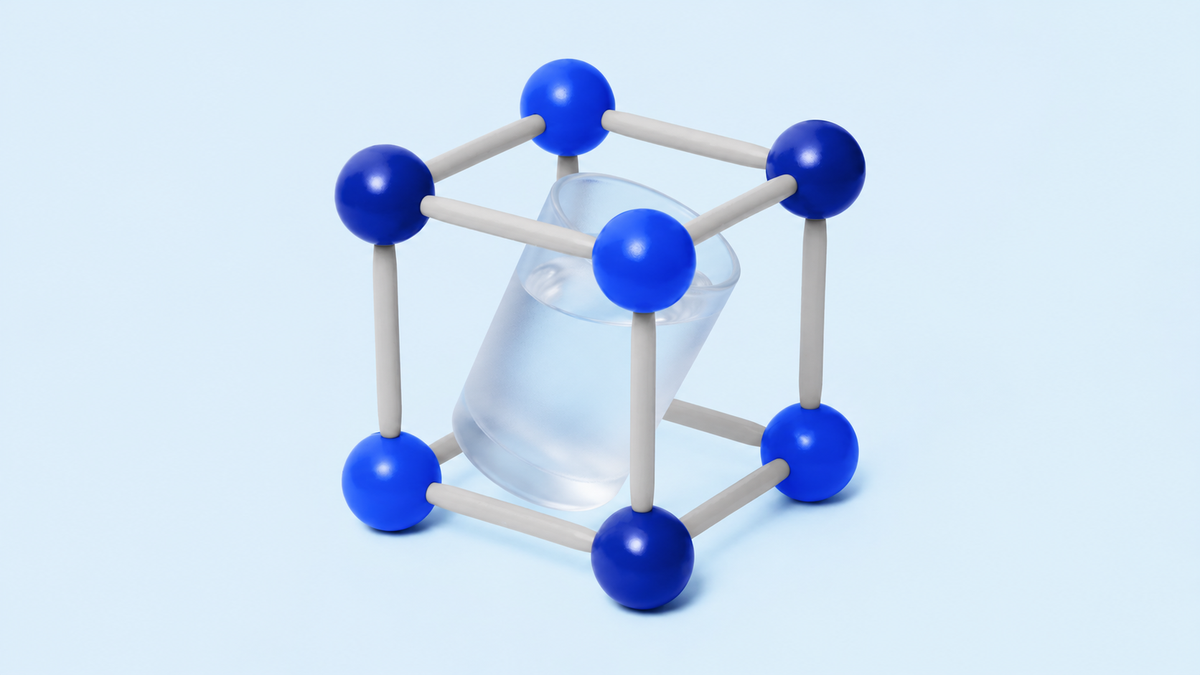
That physiology is more consistent than the endless online debates suggest. Almost anything you might put in your body during a fasting window can be judged against the same three questions. We call this framework the Three-Gate Test. The biology behind it is well established; naming it as a single test simply makes it easier to apply, so you can reason about any food, drink, or supplement yourself rather than memorizing lists.
Key takeaways
- Whether something breaks a fast is goal-dependent. The bar is lowest for simple caloric rest and highest for autophagy.
- An item breaks a fast if, in meaningful amounts, it does any one of three things: supplies calories, raises insulin, or activates mTOR.
- Activating AMPK, the body's low-energy sensor, does not break a fast. AMPK rises during fasting and helps drive the benefits people fast for.
- Water, black coffee, plain tea, and electrolytes clear all three gates and are widely considered fasting-compatible.
- Protein and amino acids, including BCAAs, break a fast through both the insulin and the mTOR gates, which makes them the clearest thing to avoid when autophagy is the aim.
- The phrase "meaningful amounts" carries weight. Trace calories, such as those in a squeeze of lemon or a pinch of citric acid, do not flip these switches.
What does "breaking a fast" actually mean?
Breaking a fast means returning your body from the fasted state to the fed state. The complication is that this shift is not a single event. Different features of the fed state switch back on at different thresholds, so an item can break one definition of a fast while leaving another intact.
During a fast, insulin falls, the body moves from burning incoming food to drawing on stored fuel, and several repair and housekeeping programs ramp up. Eating reverses that. But "eating" is a spectrum, and a teaspoon of cream is not a meal. The useful question is not whether you consumed anything at all, but whether what you consumed switched your physiology back toward the fed state in a way that matters for your goal.
The Three-Gate Test
An item breaks a fast if, in meaningful amounts, it trips any one of three gates: it supplies calories, it raises insulin, or it activates mTOR. If it clears all three, it is compatible with a fast. There is also a fourth signal, AMPK, that is often mistaken for a fast-breaker but is actually the opposite.
The gates are not fully independent. Protein, for instance, trips two of them at once. And the word "meaningful" does real work: a couple of calories or a trace of an amino acid will not move these systems. The rest of this guide takes each gate in turn, then explains the AMPK exception that lets certain compounds belong in a fasting window.

Gate one: does it contain calories?
The first and simplest gate is energy. If something delivers a meaningful number of calories, it ends the purest definition of a fast, because your body is now processing incoming fuel rather than relying solely on its reserves.
This gate is the line between clean fasting and dirty fasting. Clean fasting means consuming nothing with calories during the window: water, black coffee, plain tea, and electrolytes only. Dirty fasting allows a small caloric buffer, often capped around fifty calories, for things like a splash of cream or a spoonful of MCT oil. It is worth being clear that the fifty-calorie figure is a practical convention, not a precise physiological cutoff. The body does not flip a switch at calorie fifty-one. What matters is whether the amount is large enough to meaningfully raise blood sugar and insulin or to shut down the fasted-state programs. This is also why "meaningful amounts" matters so much: the two or three calories in black coffee, or the trace acids in a squeeze of lemon, are a rounding error.
Gate two: does it raise insulin?
The second gate is insulin, and for most fasting goals it is the one that matters most. Insulin is the hormone that signals the fed state. When it is low, the body releases stored fat and runs its fasting programs. When it rises, those programs wind down, even if calories are minimal.
Carbohydrate is the obvious trigger. Less obvious is that protein and amino acids are also insulinogenic, even without any carbohydrate, because amino acids directly stimulate insulin secretion. That is part of why protein breaks a fast. Then there is the contested case of non-caloric sweeteners. The theory is that sweet taste alone can trigger a small anticipatory release of insulin, known as the cephalic phase insulin release. The honest reading of the evidence is that this response is small, inconsistent, and seen mainly in some people rather than all. A separate and more robust concern with certain artificial sweeteners, such as sucralose, is an effect on the gut microbiome and on glucose tolerance over time, which some human studies have reported. The practical takeaway: stevia and monk fruit are the best-supported choices if you want to keep this gate firmly shut, while sucralose and aspartame are probably fine in small amounts for a weight-management fast but are not proven to be perfectly inert. For an autophagy-focused fast, plain water, black coffee, and tea remain the conservative choice.
The reason this gate matters so much is what low insulin unlocks. As insulin falls, glucagon rises, the body first draws down glycogen and then shifts to lipolysis, releasing free fatty acids for fuel. Keeping insulin low is what protects that cascade.
Gate three: does it activate mTOR?
The third gate is mTOR, a cellular sensor that detects nutrient abundance, especially protein. When mTOR is active, it signals growth and switches off autophagy, the cellular recycling process that is one of the main reasons people fast in the first place.
mTOR, the mechanistic target of rapamycin, is in effect the molecular opposite of the fasted state. It is switched on most strongly by amino acids, and one in particular, leucine, is the primary trigger. This is why even calorie-light, protein-based products break an autophagy fast: a scoop of BCAAs, a serving of collagen, or a mug of bone broth all deliver amino acids that activate mTOR and suppress autophagy. How much does it take? For building muscle, the response saturates at roughly two to three grams of leucine. The autophagy question is more sensitive: controlled human studies have shown that even smaller amino-acid doses measurably reduce markers of autophagy in muscle, and that the suppression deepens as leucine rises. The practical implication is that if your goal is autophagy, this gate is strict, and single-digit grams of amino acids are enough to count against you.
The signal that does not break a fast: AMPK
Here is the counterintuitive part. AMPK is a cellular fuel gauge that switches on when energy runs low, which is exactly what happens during a fast. Activating AMPK does not break a fast. It is part of what a fast is for.
AMPK, or AMP-activated protein kinase, is in a sense the mirror image of mTOR. Where mTOR senses abundance and suppresses autophagy, AMPK senses scarcity and promotes it, both by directly switching on the machinery that initiates autophagy and by restraining mTOR. The fasted state itself is characterized by high AMPK and low mTOR. This distinction matters when judging supplements. An ingredient that nudges AMPK rather than mTOR, while contributing no meaningful calories and no insulin, is working with the fast rather than against it. It is the reason a handful of compounds can sit comfortably in a fasting window, while a protein-based supplement of the very same calorie count cannot. The question that matters is not whether something is a supplement, but which switch it flips.

So what actually breaks a fast?
With the gates in hand, the common questions answer themselves. Here is how the usual suspects sort out. This covers everyday foods and drinks. Individual supplements are involved enough to deserve their own detailed guide, so this is the food-and-drink view.
Black coffee and plain tea are compatible. Both are calorie-free with no meaningful effect on insulin. One caveat is worth knowing: caffeine can transiently lower insulin sensitivity, so for a strictly metabolic goal, decaffeinated coffee is the cautious option. Add anything caloric, though, such as milk, cream, sugar, or butter, and you re-introduce the calorie gate.
Apple cider vinegar is compatible in the small amounts people typically use, around a tablespoon in water. It is essentially calorie-free and may even blunt the glucose response to a later meal. See apple cider vinegar for more.
BCAAs and whole protein break a fast, on both the insulin and the mTOR gates.
Collagen and bone broth break a fast, because they contain calories and amino acids. One nuance: both are low in leucine, so their mTOR stimulus is comparatively weak, which is why some people accept a mug of broth on a fat-loss fast even though it breaks a strict one.
MCT oil trips the calorie gate, since it is pure fat at roughly one hundred calories per tablespoon, but it is the least disruptive to insulin and will not stop ketosis. For a fat-burning goal it can be tolerated; for an autophagy goal it breaks the fast.
Exogenous ketones are a genuine gray area. They supply calories and, counterintuitively, can nudge insulin and blunt your own fat-burning, even though they will not stop ketosis. They are not metabolically inert. See exogenous ketones.
Sweeteners follow the insulin gate above. Stevia and monk fruit are the safest choices, while other non-caloric sweeteners are probably fine in small amounts but not guaranteed to be inert.
What does not break a fast
Four things reliably clear all three gates: water, black coffee, plain tea, and electrolytes.
Water, still or carbonated, is the foundation. Black coffee and plain tea are calorie-free and, the caffeine caveat aside, do not meaningfully raise insulin. Electrolytes deserve a special mention, because the longer you fast, the more sodium, potassium, and magnesium you lose. Replacing them carries no calories, no insulin, and no mTOR signal, which makes electrolytes both fast-compatible and often necessary for feeling well during longer fasts. This is the practical core of a fast-safe routine: hydration plus electrolytes, and nothing that trips a gate.
It depends on your goal: match the strictness to the aim
This is where the framework pays off, because the three gates map neatly onto fasting goals. The stricter your goal, the more gates your fast has to clear.
If your goal is simple digestive or caloric rest, only the first gate really matters. Keep calories near zero and you are fasting in the sense you care about. A few calories are a rounding error.
If your goal is metabolic, meaning lower insulin, better insulin sensitivity, or ketosis and fat-burning, the first two gates matter. Keep both calories and insulin low. Pure fat may be tolerated, while carbohydrate and protein are the things to watch.
If your goal is autophagy and cellular renewal, all three gates matter and the bar is highest. Here even small amounts of protein or amino acids count, and so does any meaningful insulin signal, because insulin on its own suppresses autophagy independent of calories. This is the fast where water, black coffee, tea, and electrolytes are the entire menu.

This is also why blanket answers online are unsatisfying. "Does coffee with a splash of cream break a fast?" has no universal answer. For digestive rest, barely. For autophagy, yes. Match the strictness to the aim, and the gates tell you what to allow. The same logic applies across every fasting approach, whether you practice daily time-restricted eating or longer rounds of intermittent fasting.
The Three-Gate Test will not settle every internet argument, but it replaces memorized lists with a way of reasoning. When you encounter a new product, ask the three questions: does it contain meaningful calories, does it raise insulin, and does it activate mTOR? If the answer to all three is no, it belongs in your fasting window. If the answer is yes, ask the more useful question: does it break the specific fast you are trying to do? And the moment you will use it most is the late-morning hunger spike: the 11am hunger wall guide covers why the hunger comes on a schedule and what clears the gates when hunger does inevitably appear.
References
- de Cabo R, Mattson MP. Effects of intermittent fasting on health, aging, and disease. N Engl J Med. 2019;381(26):2541-2551. https://doi.org/10.1056/NEJMra1905136
- Saxton RA, Sabatini DM. mTOR signaling in growth, metabolism, and disease. Cell. 2017;168(6):960-976. https://pmc.ncbi.nlm.nih.gov/articles/PMC5394987/
- Kim J, Kundu M, Viollet B, Guan KL. AMPK and mTOR regulate autophagy through direct phosphorylation of Ulk1. Nat Cell Biol. 2011;13(2):132-141. https://pmc.ncbi.nlm.nih.gov/articles/PMC3987946/
- Glynn EL, Fry CS, Drummond MJ, et al. Excess leucine intake enhances muscle anabolic signaling but not net protein anabolism in young men and women. J Nutr. 2010;140(11):1970-1976. https://pubmed.ncbi.nlm.nih.gov/20844186/
- Suez J, Korem T, Zeevi D, et al. Artificial sweeteners induce glucose intolerance by altering the gut microbiota. Nature. 2014;514(7521):181-186. https://pubmed.ncbi.nlm.nih.gov/25231862/
- Keijzers GB, De Galan BE, Tack CJ, Smits P. Caffeine can decrease insulin sensitivity in humans. Diabetes Care. 2002;25(2):364-369. https://doi.org/10.2337/diacare.25.2.364
- Shishehbor F, Mansoori A, Shirani F. Vinegar consumption can attenuate postprandial glucose and insulin responses; a systematic review and meta-analysis of clinical trials. Diabetes Res Clin Pract. 2017;127:1-9. https://pubmed.ncbi.nlm.nih.gov/28292654/
Filed under Fasting Fundamentals
These statements have not been evaluated by the Food and Drug Administration. This article is for educational purposes only and is not intended to diagnose, treat, cure, or prevent any disease. Consult a qualified healthcare professional before making changes to your diet, supplement routine, or fasting practice.