Brain & Performance
Why You Get Hungry at 11am When Fasting: The Hunger Wall

You start to feel it around 11am with strange precision. You are fourteen hours into your fast and the morning has gone fine. But suddenly hunger rolls in. It's as if someone rang a bell, and in a sense, someone did. For years, 11am has been when your body would begin signaling that you should start to think about planning your lunch. Your body's homeostatic rhythm has a biological clock with an appointment booked for lunch. The wall you hit mid-morning is a trained hormonal signal — and anything trained can be retrained.
Why does hunger hit at 11am?
The hunger wall is the surge in appetite you experience at your usual mealtimes when you fast through them. It is driven by ghrelin, a hormone released along your body's learned eating schedule. But ghrelin is not signaling an empty stomach, so hunger at 11am does not mean your body needs food, only that it expects it.
Ghrelin is often called the hunger hormone. The scheduled timing of its release into the body explains why the hunger wall happens daily for many folks at around 11am. For people eating on a fixed schedule, the amount of ghrelin in the body nearly doubles the hour before each meal and then dips back down after eating.1 The rise is anticipatory — ghrelin signals the body that food is coming and that it's time to eat or to prepare your meal. When researchers compared adults who habitually ate lunch at different times, each group's ghrelin peaked around their own usual lunch time, which led the authors to conclude that ghrelin may rise in anticipation of eating.2 In volunteers who fasted for a full 24 hours, ghrelin still rose at the times of their customary meals, and then fell again even though no food was ever consumed. 3 Research on mice points to evidence as to why this timing is so structurally ingrained in the body: the stomach's ghrelin-secreting cells contain their own circadian clock machinery, synchronized to prior feeding times.4 The good news is that as you fast, the hunger wave peaks, but then passes on its own, eventually fading as a new eating routine takes shape.
Key takeaways
- The 11am hunger wall is a trained ghrelin signal tied to your usual mealtime schedule, not a signal that you are out of fuel.
- Hunger occurs in waves that peak and pass on their own. Hunger does not climb steadily all day.
- Hunger and cravings are two different systems: hunger is the body asking for energy along its homeostatic schedule, while cravings are set off by the sight or smell of food or by stress or boredom, and they often point to a specific food.
- Fasting depletes sodium and water. Many fasters find replacing essential minerals helps get through the hardest hours of a fast.
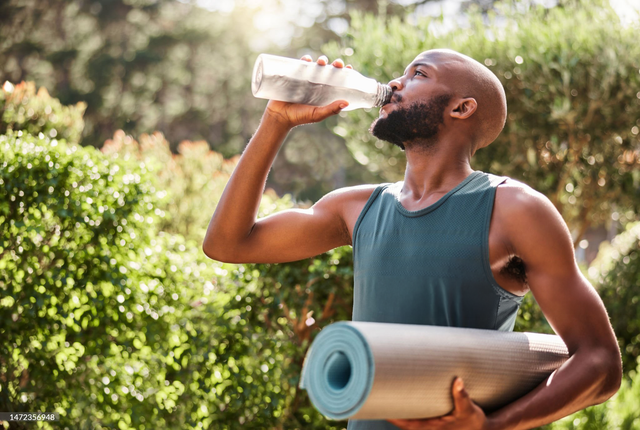
- Water, sparkling water, black coffee and staying away from food triggers are fast-safe ways to ride out a hunger wave.
- A consistent eating window can help soften or reprogram the hunger wall, sometimes as quickly as within days.
Is 11am hunger a sign you are running out of fuel?
Almost never. Fourteen hours into a fast, your liver still has glycogen, and your body is in the early stages of switching to burning fat, a natural energy handover it is designed for. (For what that transition can feel like, check out the brain fog guide.)
What about blood sugar? In a study from the 1990s, researchers isolated people from clocks and food cues and tracked their glucose continuously. When people asked for a meal, their blood sugar usually dipped just before their request by about 10 percent, but the dip reversed on its own whether or not they ate.5 In other words, fuel is not necessarily running out when you get hungry. A healthy body keeps blood sugar in the normal range between meals; the small dip is your body preparing for a meal it expects, the way your mouth waters when food is on the way.
In another study, researchers had volunteers participate in a controlled environment with artificial days and nights. The laboratory protocol slowly drifted away from the normal day-night cycle and out of sync with our shared 24-hour clock. For example, at some points in the experiment participants were eating dinner at 8am and sleeping during the day. Despite the decoupling from normal time, throughout the 13-day study, participants' hunger stuck to its own internal rhythm: it was lowest around 8am and highest around 8pm on the body's internal clock (which was still running on the natural time it had been trained on), regardless of how long it had been since the last meal.6 If hunger truly tracked fuel accurately, breakfast would be the hungriest meal of the day, when your stomach is indeed empty. But for most people it is the easiest to skip.
Will hunger keep building all day if you do not eat?
No. Hunger comes in waves, but each wave recedes over time. Mealtime ghrelin surges produce exactly that effect: ghrelin peaks but then eventually subsides if there's no food.3 The stomach even has its own rhythmic process for this. While fasted, it runs a housekeeping cycle of contractions roughly every 90 to 120 minutes, and researchers have found that hunger peaks coincide with the strongest phase of that cycle. For example, if you trigger the contractions artificially with pharmacological drugs, hunger is produced with them.7,8 Therefore hunger pangs are, in part, your stomach doing scheduled maintenance.
Experienced fasters have known this for a long time — if you ignore a hunger wave, it will pass on its own. Many will tell you a wave lasts 15 to 20 minutes. Although the exact timing has not been proven in clinical studies, the wave pattern shows up clearly in the ghrelin data.

Although the ghrelin pattern does tend to hold in longer two- to three-day fasts,9 once ketosis sets in, fasters report less hunger and less desire to eat, likely because the body has started to run on ketones, fuel sourced directly from its own fat stores. After ketosis is activated, ketones serve as the body's new energy source, in effect blunting the appetite rise you would otherwise expect.10 Once you get through the hunger wall, your body switches naturally to burning its own fat. This is the stretch you fasted for. Your brain runs remarkably well on ketones. Autophagy (the Nobel Prize-winning cellular restoration process in which cells clean up and recycle their damaged parts) ramps up. Insulin is reset and stays low. And the body, which usually spends its hours storing fat, finally gets some time to clean out and repair itself. The early fog lifts into what experienced fasters describe as a clean, level clarity that is difficult to achieve while eating.11 The hardest hour of the fast sits directly in front of its best ones.
What's the difference between hunger and a craving?
They feel similar in the moment, but they are different systems, and telling them apart is half the battle at 11am. Hunger is the body asking for energy on its learned schedule. A craving is the brain's desire for the reward of a specific food (what researchers call hedonic hunger). Cravings don't just happen on an empty stomach.12 People who have just eaten to fullness will eat again at the sight or taste of pizza or ice cream13 because this kind of appetite is activated by sensory cues that have been paired with food, as opposed to the body's actual need for fuel.14 This conditioned response has been learned, and therefore, can be unlearned.15
Mood pulls the same levers. People who have the strongest cortisol response to stress tend to eat the most afterwards, with a consistent pattern of craving sweet foods.16 Boredom alone can sometimes even be enough to open the snack drawer.17 None of these are instances of the body asking for energy; they are responses to trained moods, not to the body's actual needs.
Two questions can help you determine whether a wave is true hunger or just a craving in disguise. First ask yourself: would plain food suffice right now? Or does the feeling come with one specific food attached? And second: did the hunger wave build gradually or did it arrive the moment you saw or smelled something? Broad and building is true hunger; specific and sudden is a craving. It's worth telling them apart because the fixes are different. A hunger wave runs on a timer. It will pass whether you act on it or not. Water or a little salt can make the wait easier. A craving on the other hand, is caused by a trigger. And it can sometimes persist as long as the cue is still there. The fix, then, is to take the cue away. Leave the kitchen, close the app, put your eyes on something that isn't food.
Could hunger be caused by lack of salt, not food?
Some of what fasters call hunger may be the body asking for something else. When you fast, insulin falls, and insulin normally tells the kidneys to hold on to sodium.18 As insulin drops during a fast, the kidneys release more sodium and water. This is the natriuresis of fasting, documented in metabolic studies half a century ago.19 The loss is front-loaded and self-limiting: sodium excretion rises early, then the kidney adapts and balance returns even as the fast continues.20
One of the most repeated pieces of advice in fasting communities is some version of "put salt in your water," and it gets recommended for everything from headaches to hunger. The sodium loss is real. A fast unsupported by key minerals and electrolytes can leave you tired and lightheaded, and those symptoms are easy to mistake for deep hunger. Although no trial has tested whether salt eases fasting hunger, many experienced fasters find that electrolytes do help them to get through the hardest hours of a fast. To read more about how fasting affects the body's minerals and fluid content, check out the electrolytes guide.
How do you stop hunger and cravings without breaking the fast?
Anything you reach for at 11am has to clear the Three-Gate Test: no meaningful calories, no insulin rise, no mTOR. To stop a craving without breaking the fast, try these simple tools that clear all three gates:
- Drink ample water. A pint drunk immediately before a meal increased fullness and cut intake at that meal in a small crossover trial of lean young men.21
- Try sparkling water. In a small study of young women, 250 ml of carbonated water produced more fullness than the same amount of still water.22 A follow-up found even just the sensation of carbonation in the mouth had a similar effect.23
- Black coffee. The research on caffeine and appetite is mixed: some studies find coffee before a meal makes people eat a bit less, others find no effect at all.24 Coffee is a fast-safe ritual that fills the mealtime slot; treat any appetite effect as a bonus.
- Salt water. Untested against hunger, but it's safe to drink during a fast and helps to replenish sodium drained by a fast.
- Get away from food. Across dozens of studies, exposure to food cues, including pictures, reliably predicts craving and eating.25 If possible, avoid spending time around food or scrolling food videos while fasting.
- Occupy your mind's eye with a visual task. According to one well-studied theory of craving, cravings run on vivid sensory imagery, which competes for the same mental bandwidth as other demanding visual tasks.26 In experiments, a few minutes of a visually demanding game like Tetris measurably weakened cravings.27 The community habit of tackling a wave with a brisk walk or an engaged task works the same muscle.
- Avoid sweeteners. Sweeteners are not always metabolically inert, and responses vary person to person,28,29 but the sweet taste tends to invite the exact cravings you're trying to outlast, so a clean fast keeps the fasting window unsweetened.
Is there a supplement for hunger cravings that won't break your fast?
The hunger wall has two parts: the body's physical hunger and the brain's cravings for certain foods. On the craving side, there is one ingredient with clinical trial evidence behind it. In a randomized, double-blind, placebo-controlled trial, 60 healthy, mildly overweight women took 176.5 mg per day of Satiereal (a standardized saffron extract) for eight weeks. The experimental group taking Satiereal reported significantly less snacking between meals than the placebo group, along with a feeling of greater satiety or fullness.30 The proposed explanation stems from serotonin, a brain chemical tied to both mood and the feeling of fullness. Saffron's active compounds, crocin and safranal, are thought to increase serotonin availability in the brain, and steadier mood tends to mean less impulsive reaching for food.31
From Kētos
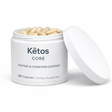
Clinically studied saffron, built into a fasting multivitamin. Core is made to help tackle the 11am hunger wall.*
Core delivers 176 mg of Satiereal saffron to help reduce snacking cravings and support satiety through the fasting window.* Two capsules each morning, nothing that breaks a fast.
Explore Core →Does the 11am hunger wall ever go away?
For most people, the hunger wall fades away on one condition: consistency. In a crossover trial of early time-restricted eating in eleven overweight adults, a 6-hour eating window lowered average ghrelin and made hunger noticeably steadier through the day, within four days.32 A five-week study testing the same schedule, this time in men with prediabetes, saw appetite improvement as well.33 Your body's hunger clock follows the schedule you keep.
But adaptation is not automatic. In a three-week trial of alternate-day fasting where the eating pattern changed every single day, hunger on fasting days stayed elevated from start to finish.34 If your eating times move every day, the hunger bell rings throughout the day, but if you maintain the same fasting window consistently, the ringing fades away.
The 11am hunger wall is a natural result of your body's meal clock. Your body learned the old schedule, and it can learn a new one. Pick a fasting window you can keep, step away from the pastry case, and let your body do the rest. And if you want company while it adapts, the free Meridian app can help keep your fasting window consistent, track your progress throughout the fast, and remind you that the hunger wall you just hit is expected and temporary. Sometimes that small reminder is the difference between riding the wave and breaking your fast.
References
- Cummings DE, Purnell JQ, Frayo RS, Schmidova K, Wisse BE, Weigle DS. A preprandial rise in plasma ghrelin levels suggests a role in meal initiation in humans. Diabetes. 2001;50(8):1714-1719. PMID 11473029; DOI 10.2337/diabetes.50.8.1714.
- Frecka JM, Mattes RD. Possible entrainment of ghrelin to habitual meal patterns in humans. Am J Physiol Gastrointest Liver Physiol. 2008;294(3):G699-G707. PMID 18187517; DOI 10.1152/ajpgi.00448.2007.
- Natalucci G, Riedl S, Gleiss A, Zidek T, Frisch H. Spontaneous 24-h ghrelin secretion pattern in fasting subjects: maintenance of a meal-related pattern. Eur J Endocrinol. 2005;152(6):845-850. PMID 15941923; DOI 10.1530/eje.1.01919.
- LeSauter J, Hoque N, Weintraub M, Pfaff DW, Silver R. Stomach ghrelin-secreting cells as food-entrainable circadian clocks. Proc Natl Acad Sci U S A. 2009;106(32):13582-13587. PMID 19633195; DOI 10.1073/pnas.0906426106.
- Campfield LA, Smith FJ, Rosenbaum M, Hirsch J. Human eating: evidence for a physiological basis using a modified paradigm. Neurosci Biobehav Rev. 1996;20(1):133-137. PMID 8622819; DOI 10.1016/0149-7634(95)00043-e.
- Scheer FA, Morris CJ, Shea SA. The internal circadian clock increases hunger and appetite in the evening independent of food intake and other behaviors. Obesity (Silver Spring). 2013;21(3):421-423. PMID 23456944; DOI 10.1002/oby.20351.
- Tack J, Deloose E, Ang D, Scarpellini E, Vanuytsel T, Van Oudenhove L, Depoortere I. Motilin-induced gastric contractions signal hunger in man. Gut. 2016;65(2):214-224. PMID 25539673; DOI 10.1136/gutjnl-2014-308472.
- Deloose E, Vos R, Janssen P, Van den Bergh O, Van Oudenhove L, Depoortere I, Tack J. The motilin receptor agonist erythromycin stimulates hunger and food intake through a cholinergic pathway. Am J Clin Nutr. 2016;103(3):730-737. PMID 26817505; DOI 10.3945/ajcn.115.113456.
- Espelund U, Hansen TK, Højlund K, Beck-Nielsen H, Clausen JT, Hansen BS, Ørskov H, Jørgensen JO, Frystyk J. Fasting unmasks a strong inverse association between ghrelin and cortisol in serum: studies in obese and normal-weight subjects. J Clin Endocrinol Metab. 2005;90(2):741-746. PMID 15522942; DOI 10.1210/jc.2004-0604.
- Gibson AA, Seimon RV, Lee CM, Ayre J, Franklin J, Markovic TP, Caterson ID, Sainsbury A. Do ketogenic diets really suppress appetite? A systematic review and meta-analysis. Obes Rev. 2015;16(1):64-76. PMID 25402637; DOI 10.1111/obr.12230.
- de Cabo R, Mattson MP. Effects of intermittent fasting on health, aging, and disease. N Engl J Med. 2019;381(26):2541-2551. PMID 31881139; DOI 10.1056/NEJMra1905136.
- Lowe MR, Butryn ML. Hedonic hunger: a new dimension of appetite? Physiol Behav. 2007;91(4):432-439. PMID 17531274; DOI 10.1016/j.physbeh.2007.04.006.
- Cornell CE, Rodin J, Weingarten H. Stimulus-induced eating when satiated. Physiol Behav. 1989;45(4):695-704. PMID 2780836; DOI 10.1016/0031-9384(89)90281-3.
- Weingarten HP. Conditioned cues elicit feeding in sated rats: a role for learning in meal initiation. Science. 1983;220(4595):431-433. PMID 6836286; DOI 10.1126/science.6836286.
- Meule A. The psychology of food cravings: the role of food deprivation. Curr Nutr Rep. 2020;9(3):251-257. PMID 32578025; DOI 10.1007/s13668-020-00326-0.
- Epel E, Lapidus R, McEwen B, Brownell K. Stress may add bite to appetite in women: a laboratory study of stress-induced cortisol and eating behavior. Psychoneuroendocrinology. 2001;26(1):37-49. PMID 11070333; DOI 10.1016/s0306-4530(00)00035-4.
- Havermans RC, Vancleef L, Kalamatianos A, Nederkoorn C. Eating and inflicting pain out of boredom. Appetite. 2015;85:52-57. PMID 25447018; DOI 10.1016/j.appet.2014.11.007.
- DeFronzo RA, Cooke CR, Andres R, Faloona GR, Davis PJ. The effect of insulin on renal handling of sodium, potassium, calcium, and phosphate in man. J Clin Invest. 1975;55(4):845-855. PMID 1120786; DOI 10.1172/JCI107996.
- Sigler MH. The mechanism of the natriuresis of fasting. J Clin Invest. 1975;55(2):377-387. PMID 236328; DOI 10.1172/JCI107941.
- Stinebaugh BJ, Schloeder FX. Glucose-induced alkalosis in fasting subjects: relationship to renal bicarbonate reabsorption during fasting and refeeding. J Clin Invest. 1972;51(6):1326-1336. PMID 5024034; DOI 10.1172/JCI106929.
- Corney RA, Sunderland C, James LJ. Immediate pre-meal water ingestion decreases voluntary food intake in lean young males. Eur J Nutr. 2016;55(2):815-819. PMID 25893719; DOI 10.1007/s00394-015-0903-4.
- Wakisaka S, Nagai H, Mura E, Matsumoto T, Moritani T, Nagai N. The effects of carbonated water upon gastric and cardiac activities and fullness in healthy young women. J Nutr Sci Vitaminol (Tokyo). 2012;58(5):333-338. PMID 23327968; DOI 10.3177/jnsv.58.333.
- Suzuki M, Mura E, Taniguchi A, Moritani T, Nagai N. Oral carbonation attenuates feeling of hunger and gastric myoelectrical activity in young women. J Nutr Sci Vitaminol (Tokyo). 2017;63(3):186-192. PMID 28757533; DOI 10.3177/jnsv.63.186.
- Schubert MM, Irwin C, Seay RF, Clarke HE, Allegro D, Desbrow B. Caffeine, coffee, and appetite control: a review. Int J Food Sci Nutr. 2017;68(8):901-912. PMID 28446037; DOI 10.1080/09637486.2017.1320537.
- Boswell RG, Kober H. Food cue reactivity and craving predict eating and weight gain: a meta-analytic review. Obes Rev. 2016;17(2):159-177. PMID 26644270; DOI 10.1111/obr.12354.
- Kavanagh DJ, Andrade J, May J. Imaginary relish and exquisite torture: the elaborated intrusion theory of desire. Psychol Rev. 2005;112(2):446-467. PMID 15783293; DOI 10.1037/0033-295X.112.2.446.
- Skorka-Brown J, Andrade J, May J. Playing 'Tetris' reduces the strength, frequency and vividness of naturally occurring cravings. Appetite. 2014;76:161-165. PMID 24508486; DOI 10.1016/j.appet.2014.01.073.
- Pepino MY, Tiemann CD, Patterson BW, Wice BM, Klein S. Sucralose affects glycemic and hormonal responses to an oral glucose load. Diabetes Care. 2013;36(9):2530-2535. PMID 23633524; DOI 10.2337/dc12-2221.
- Suez J, Cohen Y, Valdés-Mas R, et al. Personalized microbiome-driven effects of non-nutritive sweeteners on human glucose tolerance. Cell. 2022;185(18):3307-3328.e19. PMID 35987213; DOI 10.1016/j.cell.2022.07.016.
- Gout B, Bourges C, Paineau-Dubreuil S. Satiereal, a Crocus sativus L extract, reduces snacking and increases satiety in a randomized placebo-controlled study of mildly overweight, healthy women. Nutr Res. 2010;30(5):305-313. PMID 20579522; DOI 10.1016/j.nutres.2010.04.008.
- Lopresti AL, Drummond PD. Saffron (Crocus sativus) for depression: a systematic review of clinical studies and examination of underlying antidepressant mechanisms of action. Hum Psychopharmacol. 2014;29(6):517-527. PMID 25384672; DOI 10.1002/hup.2434.
- Ravussin E, Beyl RA, Poggiogalle E, Hsia DS, Peterson CM. Early time-restricted feeding reduces appetite and increases fat oxidation but does not affect energy expenditure in humans. Obesity (Silver Spring). 2019;27(8):1244-1254. PMID 31339000; DOI 10.1002/oby.22518.
- Sutton EF, Beyl R, Early KS, Cefalu WT, Ravussin E, Peterson CM. Early time-restricted feeding improves insulin sensitivity, blood pressure, and oxidative stress even without weight loss in men with prediabetes. Cell Metab. 2018;27(6):1212-1221.e3. PMID 29754952; DOI 10.1016/j.cmet.2018.04.010.
- Heilbronn LK, Smith SR, Martin CK, Anton SD, Ravussin E. Alternate-day fasting in nonobese subjects: effects on body weight, body composition, and energy metabolism. Am J Clin Nutr. 2005;81(1):69-73. PMID 15640462; DOI 10.1093/ajcn/81.1.69.
Filed under Brain & Performance
These statements have not been evaluated by the Food and Drug Administration. This article is for educational purposes only and is not intended to diagnose, treat, cure, or prevent any disease. Consult a qualified healthcare professional before making changes to your diet, supplement routine, or fasting practice.