Fasting Fundamentals
The Best Supplements for One Meal a Day (OMAD) Fasting

OMAD, one meal a day, compresses all your eating into a single window and leaves you fasting for the other 23 hours. That long daily fast is where the benefits come from, and it's also where most people struggle: the mid-afternoon energy dip, the cravings that build before dinner, the headache that arrives out of nowhere. The right supplements won't replace the discipline, but they remove the friction by covering the gaps a 23-hour fast tends to open. Here's what actually helps, what to take when, and what to skip.
Key takeaways
- Electrolytes are the highest-impact thing to get right. A long daily fast flushes sodium, potassium, and magnesium, and replacing them resolves most of the headaches, fatigue, and cramps people blame on OMAD itself.
- Focus and cravings are the other friction points. The afternoon dip and the urge to snack are predictable, and they're what derail most OMAD attempts before the eating window opens.
- Timing matters as much as the supplement. Some things belong in your fasting window (anything calorie-free that supports the fast), and some belong with your one meal (fat-soluble nutrients that need food to absorb).
- Skip anything with calories during the fast. Protein, BCAAs, gummy vitamins, and sweetened powders raise insulin or add calories, which works against the fast you're doing OMAD to get.
Electrolytes: the first thing to fix
If you change only one thing about how you do OMAD, make it this. As your insulin drops during a fast, your kidneys stop holding onto sodium and start flushing it, and water leaves with it. (This is well documented; researchers call it the natriuresis of fasting.) Potassium and magnesium shift along with it. The result is the cluster of symptoms often mislabeled the "keto flu": headache, low energy, lightheadedness, muscle cramps, and poor sleep. None of it is the unavoidable price of fasting. It's mostly low electrolytes, and it's preventable.
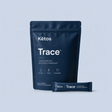
Sodium is the one you lose fastest and feel most, so it's the first to replace, with potassium and magnesium close behind. A genuinely fast-safe electrolyte has a simple profile: zero calories, no sugar or maltodextrin, sodium-forward, and potassium and magnesium included. Anything built on a sugar base belongs to your eating window, not your fast. For how much of each to aim for and the reasoning behind it, see our complete guide to electrolytes and fasting.
Focus and cravings: getting past the OMAD wall
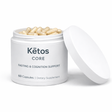
The second friction point is mental, and it's the one that ends most OMAD attempts. Somewhere in the afternoon, focus slips and the snack cravings start, and the fast falls apart. Not from hunger exactly, but from the pull to break it early. Kētos Core is built to keep that from happening, so you can carry the fast through to your eating window and complete the OMAD day you set out to do. It's formulated for the fasting window, with no sugar and no calories, so it doesn't touch your fast.
Two of its ingredients target the friction directly. SHR-5 Rhodiola is a clinically studied adaptogen that supports a healthy stress response, the kind a long fast puts you under. A clinically studied saffron extract acts on the serotonin pathways tied to mood and appetite, which takes the edge off the snacking urge that builds in the afternoon. L-theanine rounds it out: paired with the caffeine in your morning coffee, it gives steady, clean focus without the jitters. The point isn't more willpower. It's holding the fast long enough, and feeling good enough doing it, to reach the benefits you're fasting for in the first place.
Magnesium does double duty
Magnesium deserves its own mention because it works on two fronts during OMAD. It's one of the three electrolytes you're replacing, and it's also tied to sleep and muscle relaxation, two things that often suffer on a long fast as cortisol and adrenaline run higher. A large share of people run somewhat low on magnesium even when eating normally, and fasting can widen that gap. If your OMAD days leave you sleeping poorly or feeling wired but tired, magnesium is the first place to look. Many people find a form like magnesium glycinate, taken in the evening, helps most.
What to take with your meal, not during the fast
Some supplements only work, or only sit well, with food. Save these for your eating window:
- Omega-3s (fish or cod liver oil). Fat-soluble and best absorbed alongside a meal. Cod liver oil also brings vitamin A and vitamin D in a bioavailable form.
- Vitamin D and other fat-soluble vitamins. They need dietary fat to absorb properly, so a capsule taken during a water-only fast is mostly wasted.
- Probiotics. Take them with your meal, when there's food in the gut for them to work alongside.
- Anything with calories. Protein powder and any caloric supplement obviously belong in your eating window, not the fast.
One exception worth knowing: creatine is calorie-free and doesn't raise insulin, so it doesn't break a fast and the timing is flexible. Beyond its role in strength, it supports cellular energy and cognition, both useful on a long fast.
What to skip during your fast
- BCAAs and EAAs. The leucine in them triggers insulin and the mTOR growth pathway, which breaks the fasted state and blunts autophagy. Keep them for your eating window or around training.
- Protein powders and gummy vitamins. Calories and, often, sugar. Both raise insulin and end the fast.
- "Fasting" drinks built on maltodextrin. Despite the marketing, maltodextrin spikes blood sugar quickly. Read the label, not the front of the package.
A simple OMAD routine
Putting it together, a clean OMAD supplement day looks like this:
- Through the fast: water, plus a fast-safe electrolyte (sodium-forward, with potassium and magnesium). Kētos Core in the morning to hold focus and curb cravings through the afternoon. Black coffee is fine, and pairs well with Core.
- With your meal: omega-3s, vitamin D, and probiotics, plus any protein or caloric supplements.
- Flexible: creatine, any time, since it's calorie-free.
If you're new to the 23:1 rhythm, tracking your window removes the guesswork. The Kētos Window app handles the timing so you can focus on the routine, not the clock. And if you're still deciding what's safe to drink during those 23 hours, our guide to foods and beverages during fasting covers the gray areas.
References
- Sigler MH. The mechanism of the natriuresis of fasting. Journal of Clinical Investigation. 1975;55(2):377-387. doi:10.1172/JCI107941
- Ivanova Stojcheva E, Quintela JC. The effectiveness of Rhodiola rosea L. preparations in alleviating various aspects of life-stress symptoms and stress-induced conditions. Molecules. 2022;27(12):3902. doi:10.3390/molecules27123902
- National Institutes of Health, Office of Dietary Supplements. Magnesium: Fact Sheet for Health Professionals. Updated 2022. https://ods.od.nih.gov/factsheets/Magnesium-HealthProfessional/
Filed under Fasting Fundamentals
These statements have not been evaluated by the Food and Drug Administration. This article is for educational purposes only and is not intended to diagnose, treat, cure, or prevent any disease. Consult a qualified healthcare professional before making changes to your diet, supplement routine, or fasting practice.