Cellular Health & Longevity
A Comprehensive Guide to Foods and Beverages During Fasting: What to Consume and What to Avoid

The hardest part of a fast usually isn't the food you skip. It's the long list of gray-area drinks and add-ins you're not sure about: a splash of cream in your coffee, a scoop of BCAAs, a "sugar-free" electrolyte mix. Get those wrong and you can quietly break a fast you thought you were holding. This guide sorts the most common foods and drinks into fast-safe and fast-breaking, and explains the one rule that decides which is which.
Key takeaways
- One test settles most questions: calories and insulin. A fast holds as long as what you consume adds no meaningful calories and doesn't raise insulin. Almost every gray-area drink resolves once you apply that test.
- Water, black coffee, and plain tea are the dependable core. They carry essentially no calories and don't move insulin, so they're safe across the fasting window. The cream, sugar, and "just a splash" of milk are what cause problems.
- Plain electrolytes are fast-safe; the fillers in many mixes are not. Sodium, potassium, and magnesium have no calories and don't raise insulin. The sugar, dextrose, and maltodextrin in most sports drinks do, and that is what breaks the fast.
- The usual fast-breakers hide in plain sight. Bulletproof coffee, bone broth, BCAAs, and creamers all supply calories, protein, or an insulin response, even when they're sold as fasting aids.
The one rule that decides what breaks a fast
A fast is a metabolic state, not just an empty stomach. Its defining feature is low insulin with no incoming calories, and that combination is what unlocks the benefits people fast for: steady fat-burning and autophagy, the cellular cleanup process that ramps up when food is absent. Anything that raises insulin or delivers meaningful calories pulls you out of that state.
So the test for any food or drink is simple: does it add calories, and does it raise insulin? If the answer to both is essentially no, it's fast-safe. If either is yes, it belongs in your eating window. Keep that rule in mind and the rest of this guide is mostly detail.
Fast-safe: what you can have during the window
These carry little or no calories and leave insulin where it should be during a fast.
- Water, still or sparkling. The foundation of any fast. Plain or carbonated, it's always safe, and staying hydrated heads off many of the symptoms people blame on fasting itself.
- Black coffee. A cup has only a few calories and doesn't raise insulin, so it's fast-safe. Keep it black. The moment you add cream, sugar, or a sweetened creamer, it moves to your eating window.
- Plain tea. Black, green, oolong, or herbal, unsweetened tea is fast-safe and even lighter than coffee. A good option once you've hit your coffee limit for the day.
- A squeeze of lemon or lime. A small squeeze in water is calorically trivial and won't break a fast. A whole glass of juice is a different story: that's a real sugar load.
- A little apple cider vinegar. A tablespoon in water is fast-safe, and some people find it makes plain water easier to get through on a long fast.
- Plain electrolytes. Sodium, potassium, and magnesium with no sugar are fast-safe, and on a longer fast they're close to essential. For why fasting depletes them and how much to replace, see our complete guide to electrolytes and fasting.
Break a fast: keep these for your eating window
Each of these fails the calories-or-insulin test in some way.
- Cream, milk, and creamers. Including half-and-half and plant milks. Even a splash adds calories and protein, which nudges insulin and ends the fasted state. "Barely any" still counts.
- Bulletproof coffee. Coffee blended with butter and MCT oil runs 200 to 400-plus calories. It keeps insulin low, so it suits a "fat fast," but it is not a zero-calorie fast: those calories switch off autophagy and the clean fasted state. If you're after the cellular benefits, save it for your eating window.
- Bone broth. Genuinely useful for breaking a fast, and worth keeping for that. During the fast, though, its calories and amino acids (from collagen) raise insulin enough to count as food.
- BCAAs and EAAs. Marketed as muscle-preserving, but the leucine in them triggers insulin and signals mTOR, the growth pathway that fasting and autophagy quiet down. They break the fasted state with almost no calories to show for it. Take them in your eating window or around training.
- Sweetened and "sugar-free" mixes. Anything built on sugar, dextrose, or maltodextrin spikes blood sugar and insulin. Maltodextrin is the sneaky one: it often hides inside "sugar-free" labeling but raises blood sugar fast.
- Exogenous ketones. They don't add carbs or spike insulin, but they do supply an external fuel source. For a strict fast, that interrupts the point of the exercise, which is to run on your own stored energy. Fine on a ketogenic diet, but it isn't a true fast.
Here's the short version in a single view:
| Fast-safe | Fast-breaking |
|---|---|
| Water (still or sparkling) | Cream, milk, and creamers |
| Black coffee | Bulletproof coffee |
| Plain tea | Bone broth |
| Lemon or lime, a squeeze | BCAAs and EAAs |
| Apple cider vinegar, a little | Sweetened or maltodextrin mixes |
| Plain electrolytes (no sugar) | Exogenous ketones |
How strict should you be? It depends on your goal
The honest answer is that the line moves with your reason for fasting. If you're after the deep cellular benefits, autophagy and a fully rested insulin system, be strict: water, black coffee, plain tea, and plain electrolytes, nothing else. If your main goal is appetite control or time-restricted eating for weight management, a few calorically trivial extras (a squeeze of lemon, a small splash of cream) may be a fair trade for sticking with the plan over the long run. Neither is wrong. Just know which fast you're doing, and don't let "a little of everything" turn a strict fast into a steady trickle of calories by accident.
Do supplements break a fast?
It's the most common follow-up question, and the same rule answers it: a supplement breaks a fast only if it carries calories or raises insulin. Most vitamins, minerals, and botanical extracts in capsule or tablet form do neither, so they're fast-safe. The exceptions are the obvious ones, gummy vitamins (sugar), oil-based softgels like fish oil (calories), and amino acids like BCAAs (insulin), all of which belong in your eating window. A clean, calorie-free capsule taken with water will not pull you out of a fast.
Where Kētos fits
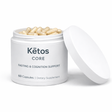
Core is exactly that kind of supplement, a calorie-free capsule with nothing in it that breaks a fast. Its real job, though, is to help you fast successfully. The benefits of fasting come from going the distance: staying consistent and reaching the longer windows where the real changes happen. Most fasts end early, cut short by cravings, an energy dip, or a foggy head in the afternoon. Kētos Core is built to keep those from derailing you, so you can hold your fast longer, reach your fasting goals, and feel good doing it, instead of breaking at hour 14. It works through ingredients like SHR-5 Rhodiola, a clinically studied adaptogen that supports a healthy stress response, and a clinically studied saffron extract that acts on the serotonin pathways tied to mood and appetite. And if you're tracking your eating window, the Kētos Window app keeps the timing simple.
Filed under Cellular Health & Longevity
These statements have not been evaluated by the Food and Drug Administration. This article is for educational purposes only and is not intended to diagnose, treat, cure, or prevent any disease. Consult a qualified healthcare professional before making changes to your diet, supplement routine, or fasting practice.